

Agenda - 2025
The Humanitarian Finance Summit will return to London in February 2026.
If you are interested in taking part, please contact andreas.schonning@aid-expo.com
8:30 – 9:20 | Registration Opens
9:20 – 9:30 | Opening Remarks
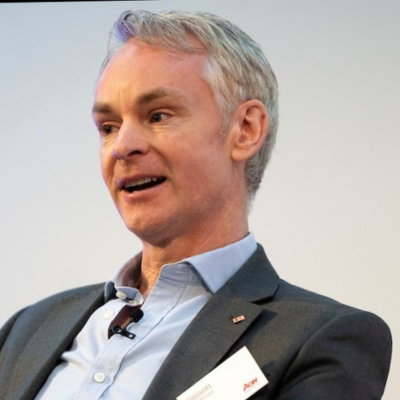
Simon Meldrum
Innovative Finance, Private Sector & Innovation Unit, IFRC & Executive Director, HFF

Nicholas Rutherford
Managing Director
AidEx
Agenda Overview - 2026
Please note: The agenda may be subject to change as programme details are finalised.
-
-
The Summit opens with a data-driven presentation of the 2025 Global Humanitarian Assistance Report, which paints a sobering picture of the sector’s financial health. Amid unprecedented funding shortfalls, shrinking donor commitments, and rising needs, the report underscores the urgent need to rethink how we fund and govern humanitarian action. The report also highlights the growing role of non-traditional donors and emerging trends in anticipatory financing.
-
The humanitarian sector is facing a growing liquidity crisis that threatens to paralyse operations in the near term. Recent analysis from GHA and ICVA point to shrinking donor disbursements, prolonged delays in funding flows, and dangerously low cash reserves across agencies and NGOs - leaving frontline actors unable to plan, scale, or sustain critical humanitarian operations. This exposes the fragility of a funding architecture overdependent on ad hoc appeals, short-term grants, and a narrow donor base. Yet within this challenge lies an opportunity to reimagine how humanitarian finance functions, drawing on lessons from other sectors that have successfully introduced cost-efficient and predictable models. From pooled funds and anticipatory finance to blended capital approaches, practical innovations are emerging that can help humanitarian actors manage risk, improve liquidity, and strengthen resilience.
This opening plenary brings together leaders from finance, policy, and humanitarian response to explore a central question: How can we address the liquidity crisis of today while building the financing system we need for tomorrow?
Churchill Room
-
As traditional aid structures face increasing strain, the humanitarian system must rethink who leads, who funds, and how responsibility for crisis response is shared. This session brings together the emerging donors, philanthropies, and innovative financing actors reshaping the future of humanitarian action. These non-traditional partners are filling a critical gap left by overstretched aid budgets and introducing new forms of capital, stronger regional and local ownership, and fresh perspective drawn from climate finance, blended finance, and private sector engagement.
Churchill Room
Gielgud Room
-
This breakout session brings together industry leaders from across capital markets, the humanitarian, asset management, and impact investment worlds to explore what it would take to mobilise $10 billion in humanitarian innovative finance by 2030. The discussion will address the practical pathways for scaling investments, what it takes to build investor confidence and incentivise private capital, and the reforms needed to build an investable humanitarian finance ecosystem.
12:30-13:30 Lunch Break - Pickwick Room
-
As anticipatory action has gained significant traction within the humanitarian sector in recent years, demonstrating that acting before crises peak can save more lives, protect livelihoods, and reduce costs. To scale anticipatory action, the sector must move decisively from ex post disaster response to ex ante risk management – embedding early action within integrated disaster risk financing systems. This means linking forecast-based triggers to pre-arranged funding, combining instruments such as contingency funds, insurance, and crisis bonds to ensure resources flow when and where they are most needed. This session explores how humanitarian, development, and finance actors can work together to create systems that align risk financing that are faster, more predictable, and capable of addressing today’s escalating climate and conflict risks.
Gielgud Room
-
-
Item description
-
14:45-15:15 Networking Break - Pickwick Room
Churchill Room
-
Cash now accounts for around a fifth of global humanitarian aid and has transformed the experience of people receiving support. Yet this has not translated into deeper financial inclusion. At the same time, DFIs are under pressure to operate closer to crisis settings and engage earlier in the resilience and livelihoods space. This session brings these two trends together. Building on PROPARCO’s recent report on “Financial Inclusion of People Benefiting from Humanitarian Cash Transfers” the session will explore how humanitarian cash can be linked to long term financial inclusion and how DFIs can play a catalytic role in making that possible. We will discuss the systemic barriers that keep accounts dormant, the importance of economic participation, and the types of partnerships needed to create viablefinancial pathways for people in humanitarian settings.
Through the cases from multiple regions, the discussion will demonstrate how blended finance can support local financial institutions, strengthen payment infrastructure, and crowd in investment to humanitarian and FCA settings.
-
Item description
-
Local organisations are the first and often only responders in some of the world’s most complex crises - and yet they continue to receive only a tiny share of global financing. In this fireside chat, speakers will share insights from nearly five decades of community-rooted humanitarian action across Yemen across health, WASH, protection, food security and climate-affected settings to explore how financing structures can strengthen “good” localisation: aligning funding with community priorities, embedding equity in risk allocation, and empowering local ownership.
Gielgud Room
-
Description text goes here
-
Item description
-
Description text goes here
-
This session focuses on how capital providers can operate more effectively across the Humanitarian-Development-Peace (HDP) Nexus to support vulnerable communities in fragile and conflict affected settings. It examines what is required to finance resilient systems and functioning markets in environments defined by volatility, weak institutions, and chronic underinvestment. The dialogue moves beyond HDP Nexus and asks what DFIs, philanthropic investors, governments, and humanitarian actors must do together to reduce risk, create investable pathways, and strengthen resilience at scale.
The panellists will explore:
How innovative and blended finance can convert fragility into investable resilience, and how these tools can anchor a more coherent HDP nexus that links humanitarian stabilisation with development and climate objectives.
What governance, data, and accountability structures are needed to give investors confidence in outcomes, de risk early-stage interventions, and enable coordinated action across humanitarian, development, and peace sectors.
How to generate viable pipelines in FCAS, using humanitarian reach and local systems insight to reveal opportunities, strengthen domestic capacity, and provide a sequenced pathway for DFI and philanthropic capital.
What shifts in policy, institutional behaviour, and incentives are required to make the HDP nexus real, enabling institutions to plan together, pool risk, and finance resilience rather than repeatedly finance response.
How to design financing architectures that are larger, fairer, and locally led, ensuring capital flows support local partners, equitable risk sharing, sustainable market development and locally driven solutions.
-
Churchill Room
10:45-12:15 Aligning Risk Financing with Anticipatory Action
Session Description
Risk Financing 1
Managing Director
AidEx
Risk Financing 2
Managing Director
AidEx
Risk Financing 3
Managing Director
AidEx
Risk Financing 4
Managing Director
AidEx
Risk Financing 5
Managing Director
AidEx
Gielgud Room
10:45-11:15 Case Study 1: TBC
Session Description
Case Study 1 Speaker 1
Managing Director
AidEx
Case Study 1 speaker 2
Managing Director
AidEx
10:45-11:15 Case Study 2: TBC
11:15-11:45 Break
Session Description
Case Study 2 Speaker 2
Managing Director
AidEx
Case Study 2 Speaker 1
Managing Director
AidEx
Churchill Room
-
Nicholas Rutherford, Managing Director, AidEx
Nicholas Rutherford, Managing Director, AidEx
Nicholas Rutherford, Managing Director, AidEx
Nicholas Rutherford, Managing Director, AidEx
Gielgud Room
-
Description text goes here
-
Item description
-
Description
9:30 – 10:00 | Opening Keynote Address

Rt Hon Mr Andrew Mitchell
MP for Sutton Coldfield, Former UK Minister for International Development, Deputy Foreign Secretary and Shadow Foreign Secretary
10:00-10:30 | Insights From the Field - Mapping the Opportunities, Barriers, Instruments and Players So Far
This session will map out the current humanitarian impact finance landscape, showing who does what, at what stage, and with what investment criteria. This presentation will draw from the report to provide concrete examples so far for change agents to develop projects that fulfil humanitarian objectives in more stable contexts of protracted crisis.

Vanina Farber
elea Professor for Social Innovation and Dean of the EMBA
Programme
Institute for Management Development (IMD)

Andreea Anastasiu
Executive Director Government Outcomes Lab (GO Lab)
University of Oxford
10:30-11:30 | Reimagining the Financial Markets to Enhance Humanitarian Impact
With over 1 billion living in fragile and conflict affected settings, there is a critical need for any socially aligned or impact investing to recognise, address, and effectively deploy within humanitarian contexts to support vulnerable communities. While there’s been significant growth among investors for sustainable and impact-driven investing, it is not yet matched by an active pipeline in lower-income countries & FCA settings.
This panel will discuss catalysts and impediments to increase the social benefit finance, approaches to cross-sector collaboration, and expanding innovative finance beyond traditional humanitarian players and funders as well as overcoming the main challenges of developing investable opportunities.

Haje Schütte
Deputy Director
Organisation for Economic Co-operation and Development (OECD)

Sir Paul Collier
Professor of Economics and Public Policy
Blavatnik School of Government, Oxford University

Kelly Knight
Counsel
Reed Smith

Simon McGregor
COO & CFO
ForAfrika

Veronika Giusti Keller
Head of Impact Management
BlueOrchard Finance
11:30 – 12:00 | Coffee Break
12:00-13:00 | Discussion on Blended Finance for Humanitarian Challenges & Crisis; Potential for Scale
What is the potential of blending humanitarian capacity and funds with capacity and financing from public, and private investors to mobilise larger and more sustainable resources to achieve positive impacts for populations affected by fragile and conflict-affected situations?
With reference to concrete examples, this session will debate possible opportunities for blended finance in humanitarian and fragile settings, how humanitarian organisations can engage and take different roles in blended finance structures, and what bottlenecks and challenges needs addressing if to attract “humanitarian” blended finance at scale.

Dr. Fawad Akbari
Senior Director, Humanitarian Innovation and Programme Optimisation
Grand Challenges Canada

Ellen Brooks
Director for Innovative Finance
International Rescue Committee (IRC)

Ariane Pevide
Director, Global Blended & Climate Finance
The Bank of Tokyo-Mitsubishi UFJ, Ltd (MUFG)

Anne-Sofie Munk
Director
Humanitarian Innovative Finance Hub (HIFHUB) - hosted by the Danish Red Cross

Simone Utermarck
Senior Director, Sustainable Finance
International Capital Market Association (ICMA)
13:00 – 14:00 | Networking Lunch
14:00-14:30 | Fireside Chat: IFFIm - from the beginning to the future
This session will delve into the transformative journey of IFFIm, highlighting its evolution and impact as a pioneering financial mechanism supporting global vaccine initiatives. IFFIm Board Member Rachel Turner will share insights from the inception of IFFIm and unpack its strategic role in accelerating vaccine coverage and responding to humanitarian crises through flexible funding solutions.

Rachel Turner
Board Member
International Finance Facility for Immunisation (IFFIm)

Tessa Walsh
Green/ESG Financing Editor
IFR/London Stock Exchange Group (moderator)
14:30-15:00 | Fireside Chat: Disaster Risk Financing and Insurance (IFRC-DREF Insurance)
The International Federation of Red Cross and Red Crescent Societies’ Disaster Response Emergency Fund (IFRC-DREF) is a vital fund that provides immediate funding for National Red Cross and Red Crescent Societies when disaster strikes, especially for smaller scale emergencies that may not attract global attention. Previously, the Fund could run dry before year-end in periods of excessive or unanticipated demand, prompting the IFRC to secure a groundbreaking – and humanitarian sector first – indemnity insurance policy to backstop the fund. Now, for the first time ever, a single, worldwide, commercial indemnity insurance policy will pay the emergency humanitarian costs of disasters.

Florent Del Pinto
Head of DREF, Information Management and Quality
IFRC

Bridget Gainer
Global Head Public Affairs & Policy
Aon
Tessa Walsh
Green/ESG Financing Editor
IFR/London Stock Exchange Group (moderator)
15:00-16:00 | Linking Private Markets and Climate Finance to Improve Resilience and Emergency Response for the Most Vulnerable Countries
Over the last decade, the dramatic consequences of climate change induced disasters have significantly widened the crisis protection gap, especially for FCA countries and vulnerable communities. The rising cost of these disasters pose increasing risks to sustainable development, particularly in low-income countries and the most vulnerable communities, leading to diminished resilience against shocks and exacerbated climate impacts.
Despite opportunities for action, climate finance has yet to be leveraged in a way that maximizes synergies between climate adaptation and humanitarian response in fragile states. This session will explore new inclusive, multi-stakeholder and cross-sector approaches that have been effective in financing responses and close the financing gap through innovative financing instruments.

Lance Bartholomeusz
General Counsel
UNHCR

Dr. Annette Detken
Head of ISF Management and Climate Risk Analysis
InsuResilience Solutions Fund

Caroline Birch
Senior Advisor
Humanity Insured

Dr. Daniel Clarke
Executive Director
Centre for Disaster Protection

Christina Bennett
CEO
START Network
16:00-16:30 | Coffee Break
16:30-17:30 | Closing Plenary: CEO Panel - What's Next for Humanitarian Financing?
The urgent need for bold and transformational change in humanitarian financing has never been greater or clearer. It’s imperative that we develop actionable humanitarian financing mechanisms at scale that reflect today’s political and economic realities but also pave the way for a sustainable future.

Hanna Jahns
Director B - Strategy and Policy
DG ECHO - European Commission

Béatrice Butsana-Sita
CEO
British Red Cross

Lasitha Perera
CEO
Development Guarantee Group (DGG)

Florian Kemmerich
Managing Partner
KOIS

Simon Kingston
Co-Head of Social Impact and Education Sector
Russell Reynolds

Liz Henderson
Global Head of Climate Risk Advisory
Aon